October 17th, 2009 by Rachel | Country: France | 1 Comment »
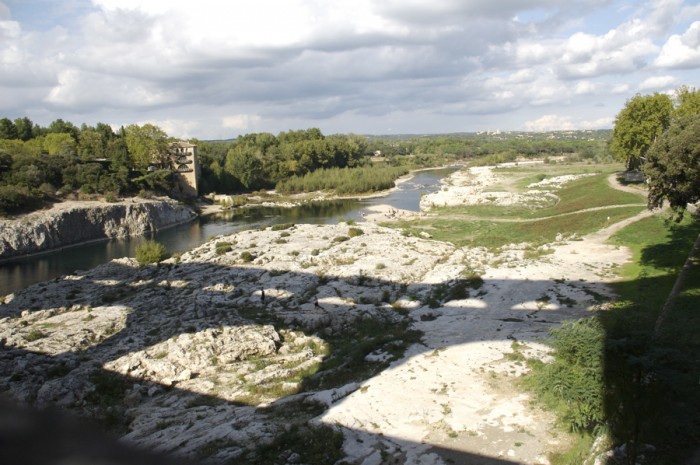
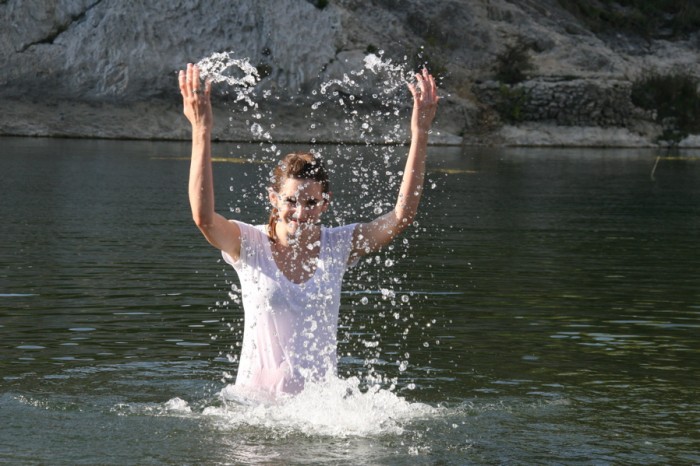
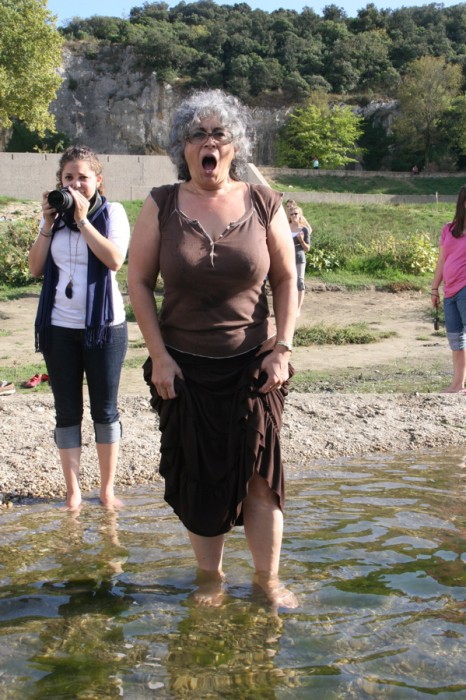
Viewing major tourist attraction sites are not all about just taking a quick glance at it and snap a photo in order to brag to your family and friends that you’ve visited this particular site. Visiting the sites is about admiring what makes them so special and also having the ability to walk around see them in three-dimensional form. Some sites offer more than just a viewing opportunity. Pont du Gard where we visited after visiting the city center of Nimes, is an example where not only we can admire the greatest creation of the Romans, but also swim in the Gard River and bake under the sun. In spite of the water being chilly, it did not stop us from having a blast. We were all brave enough to step in the water and get soaked, even if we had clothes on!
As an art history student, it’s important for me to write down my observations and some facts that I’ve learned about the site. What’s incredible about this water aqueduct, built around during the 1st A.D., was that it was constructed without any use of mortar because stones were cut precisely. As one may notice, there are stones protruding out of the bridge. Those stones were just simply supports for the scaffolding. During the first few centuries, this bridge was used to bring the water from Fontaines d’Eure springs near Uzès to the Castellum in the Roman city of Nemausus which is now known as Nimes. Unfortunately, by around 9th century, it became totally useless and then, during the Middle Ages, it became a pedestrian bridge.
This bridge has very typical ancient Roman appearance as there are three rows of arcades. There is a sense of harmony because all three rows depict repeating arches with perfect half circular tops. It’s such a simple structure not only because of the repeating arches, but also because the color was uniform. It was just simply in the color of the sand.


October 12th, 2009 by Rachel | Country: France | No Comments »
One would envision that ancient Roman architecture only exists in Rome. That is not the case. Romans sure did conquer many parts of Europe including France where we can find a Roman amphitheater known as Arena of Nimes built by the Romans around 70 A.D. in Nimes.
This arena that seats 22,000 spectators, was built as a venue for gladiatorial combat, waterborne battles, and chariot racing, according to my travel guidebook, Eyewitness Travel: Provence and Cote d’Azur. Surely, the Roman empire did not last forever as when it collapsed in 476, it became a fortress and knights’ headquarters. Then, in 19th century, this arena was restored, and it is considered one of the best preserved Roman amphitheaters. Nowadays, it is used to present bullfights.

Without any doubts, the arena features typical ancient Roman architecture. Embedded columns adorn between the arches creating a geometric rhythm. The arches appear to be in perfect half circles. As I see two rows of arcades surrounding the arena, it is evident that the height is two story high. Thanks to the restoration during the 19th century, it feels as if the arena was built not too long ago. There were rarely any missing parts unlike the Colosseum. As I went inside, I felt that I could envision myself watching a sports game, bullfight, or a concert thanks to preserving the seating area.

On top of admiring the Arena, I have to also add that the professor had a wonderful time giving a little performance there!

After viewing the Arena, I headed to Maison Carré, another ancient Roman building. Viewing this building known as “square house” reminded me of viewing the Parthenon in Athens, Greece. The building was in a perfect rectangular with columns. Unlike the Parthenon where the columns surrounded the entire building, the columns were only in front of the building known as the façade. Like the Arena, I learned that it is also one of the best preserved ancient Roman structure.






October 12th, 2009 by Rachel | Country: France | No Comments »
A few days ago, I suggested my art history professor to visit one of the most spectacular village in the Luberon region where we can see paper being made through machines from hundreds of years ago rather than seeing an ordinary cathedral in another village.
As we drove through the Luberon region, we followed the street signs saying “Fontaine de Vaucluse.” The minute we approached a giant bridge, we could see water in the most gorgeous color, turquoise, running down the stream. We followed the river, la Sorgue, and once we hit the end of the river, we came across a very breathtaking scene that caused everyone in the car to say “Woooooaaaaah!” Mountains raised above the land in the backdrop. Green leaves adorn the rocky mountains. Little simple buildings rest along both sides of the river. Red leaves sit over the fences on the patios. A wheel by the river stands motionless. In spite of a large number of clouds in the sky, the sun peaks through and shines the entire village.
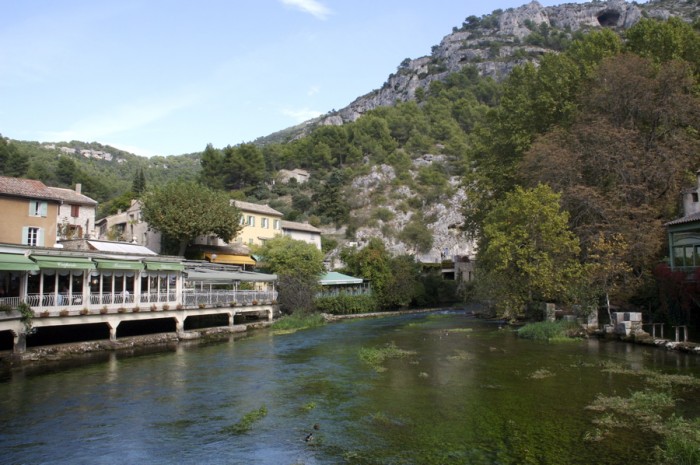
Fontaine de Vaucluse is the place where the river, la Sorgue, commences. What’s absolutely fascinating about this river as not only it has one of the freshest water in the world, but also, no one knows from where the water is coming.
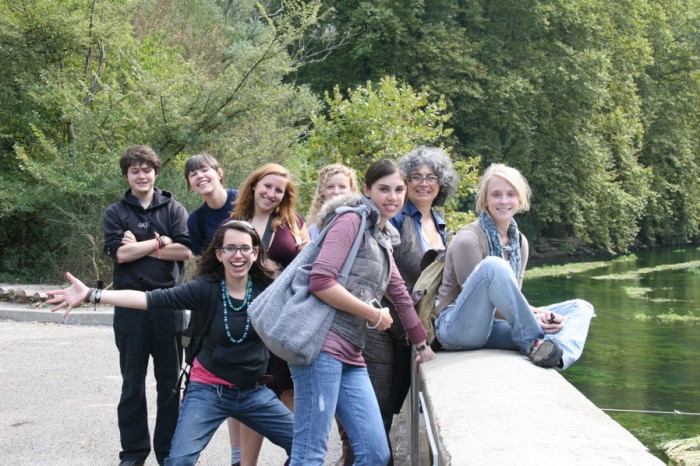
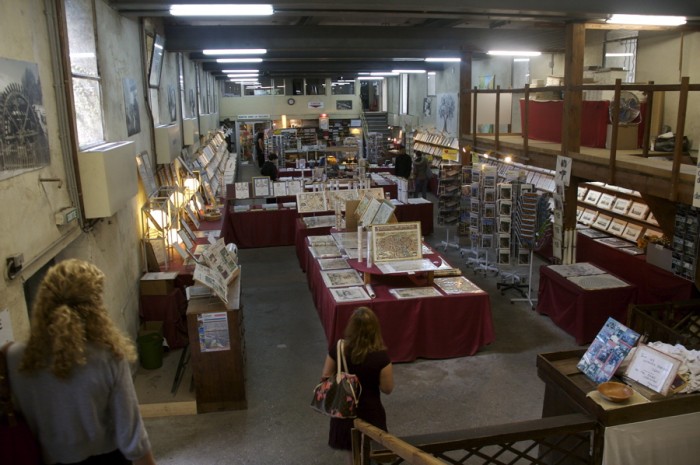
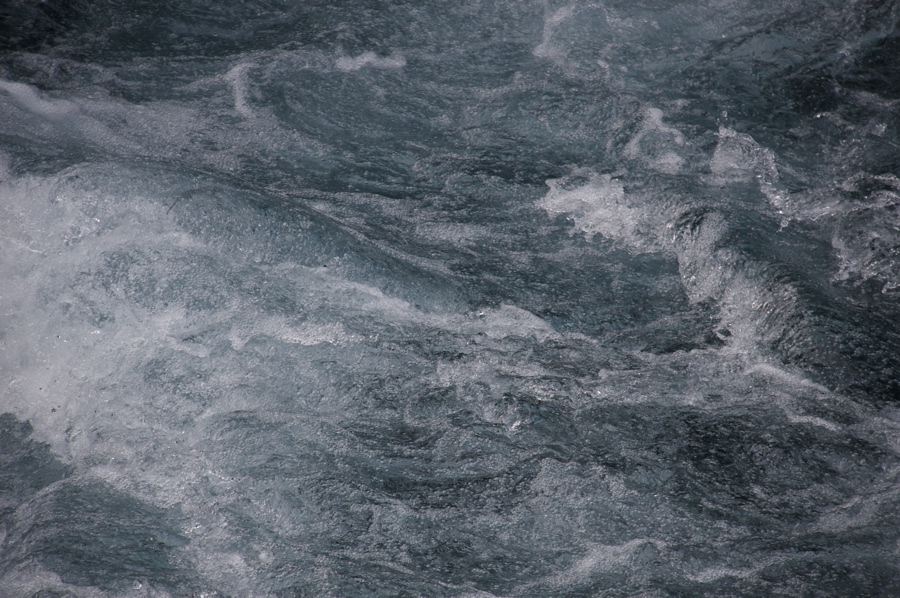
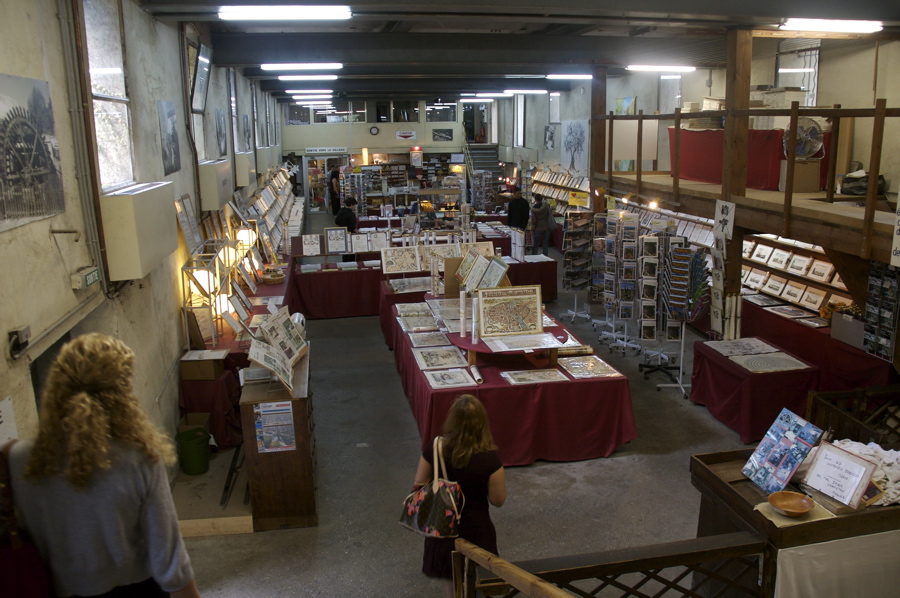
After having parked the car, we walked up the hill to visit Moulin à Papier, a museum and a shop displaying paper made from machines that were built hundreds of years ago. Right by the museum, we could see water rushing down the stream in a speed of a bullet creating white splashes. The students and the professor were in a complete awe of the scene.
After spending few moments admiring the scenery, we headed to the museum where we could see machines used to make paper.
Paper displayed in the shop were not ordinary paper that we would see in Office Max or Office Depot. They were paper with real treasures inside them. There were flowers inside some of the paper creating a lovely aroma. Some had leaves inside them and some others had confetti. One set of papers even had scraps from jeans. The edges had unclean cut, but imperfect things are beautiful. The paper also had a rough texture creating a value to the sense of touch.
As we were heading back to school, I asked students for their thoughts on Fontaine de Vaucluse.






October 11th, 2009 by Rachel | Country: United States (home) | No Comments »
As you may notice, the pictures are missing from this blog. That is because this blog has been hacked by a very evil person! I will get the pictures back online as soon as I can.
October 5th, 2009 by Rachel | Country: France | No Comments »
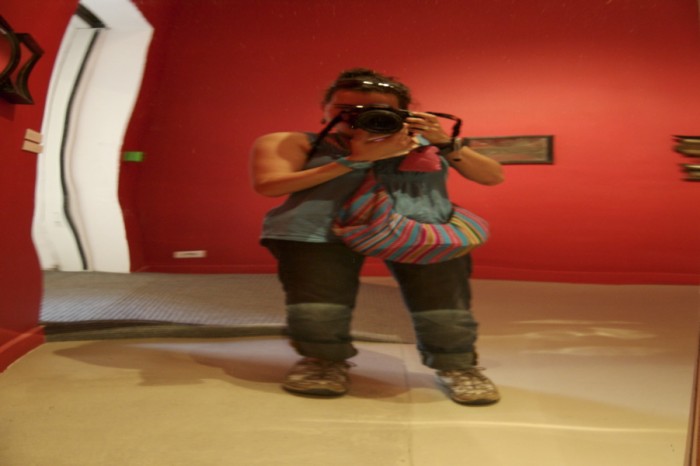
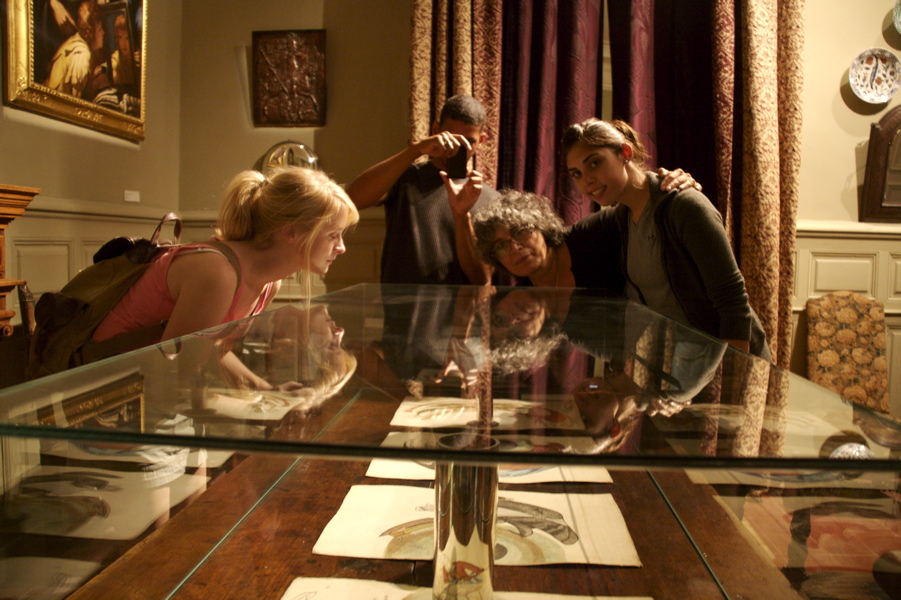
As I stand in a room surrounded by red walls, I stare myself in a mirror and totally freaked out. “Oh my goodness! What happened to me!” I said to myself. I looked obese. My arms and legs were dramatically shorter. My body looks like as if it has been squashed from head to toe. I realize that I have been transformed into a dwarf. Was there a random fairy hiding somewhere and just magically turned me into a little person? Then I walked a few feet and faced myself in front of another mirror. All of the sudden, I have just been completely stretched out. I look like a piece of a rubber stick. I’m convinced that there’s an invisible fairy transforming me into different forms.
Of course, all of this is fictional. I was just simply looking a mirror that was constructed in curves rather than flat like any other typical mirrors we view on daily basis. Mirrors are incredible pieces of art as they come in all kinds of forms and sizes to give us some unique views of ourselves. For instance, when I saw myself in front of a shattered mirror, I felt as if I was seeing myself in a painting produced by Picasso. My body appeared to be completely disoriented.
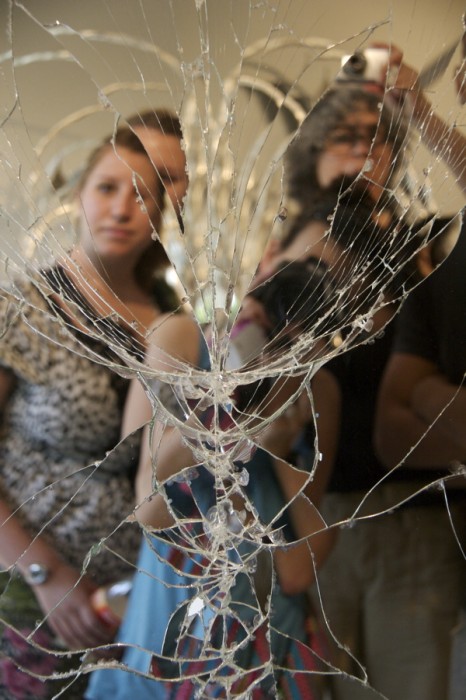
My French Modernism course attended a field trip to Musee Louis Vouland in Avignon to view the stunning show of mirrors and numerous antiques.
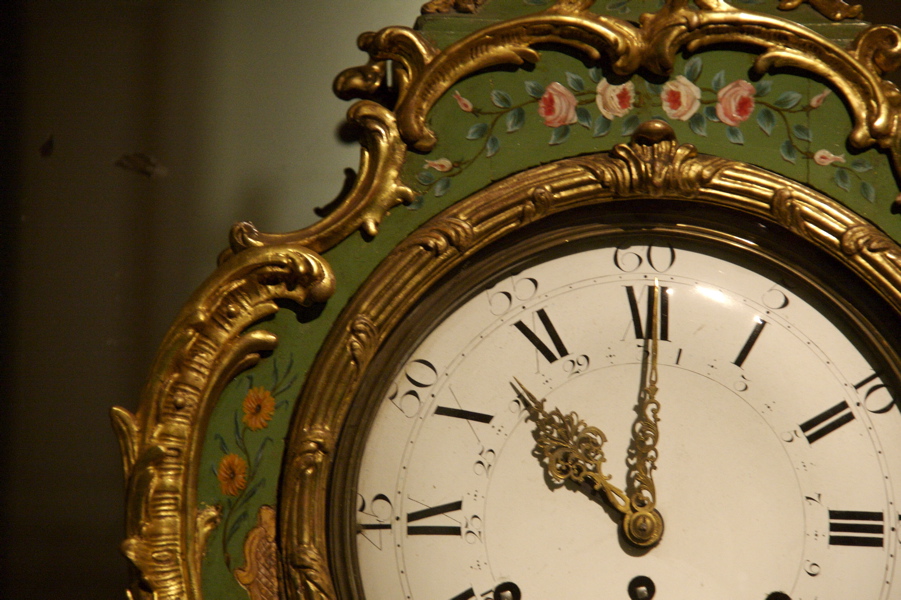
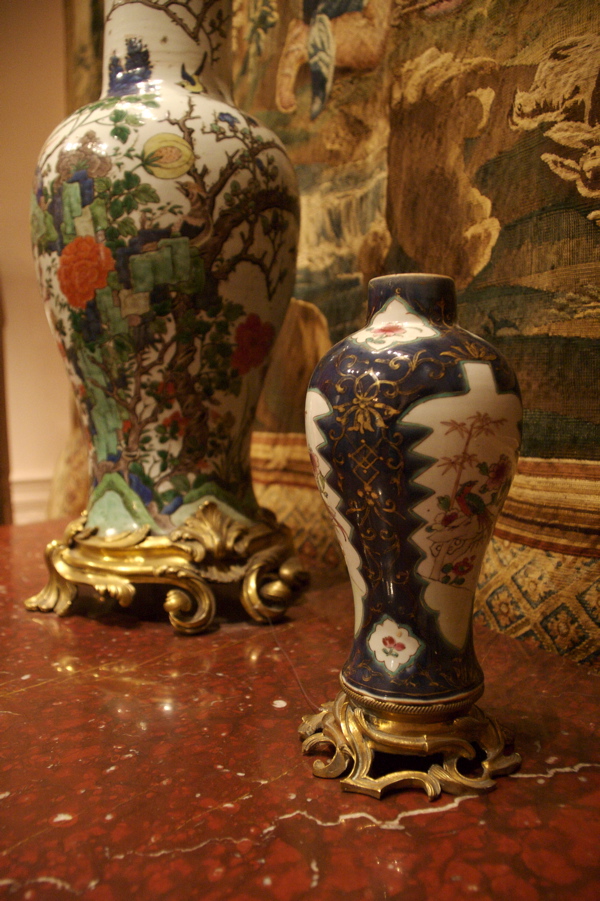
Viewing the antiques from the 18th century gave me a feeling as if I was traveling back in time to visit a home that was built in the 1700′s. There was one particular bed that was filled with great admiration. A beautiful casing over the bed had magnificent carvings. The comfort on the bed gave me a feeling of my wanting to get in the bed and snuggle. In another room, a clock with stunning carvings in golden color stands on a dresser and continues to tick away. Plates with painted green leaves hangs against the green backdrop.








October 4th, 2009 by Rachel | Country: France | No Comments »
On a cool Sunday morning, the sun was shinning so bright that it was scintillating one of the most beautiful rivers in the world, la Sorgue. As I paddle as fast as I could down the river with two other paddlers in my boat, the breeze races in the opposite direction. The muscles in my arms were twitching with the sentiments that I was getting a good exercise like as if I was weight lifting. The time of the year couldn’t have been better. I was passing by trees adorned with pure green leaves; however there were a few shades of oranges, yellows, and reds. I felt like I was sailing through a fairyland where the scenery is just filled with treasures. The water is so clear that we can see plants in the ground. Water rushes down the steep hills creating white splashes.
I was canoeing from Fontaine de Vaucluse to Il-sur-la-Sorgue for two hours this morning.
October 3rd, 2009 by Rachel | Country: France | No Comments »
Our planet is stunningly colorful. Soil comes in various colors including brown, red, orange, and yellow. Provence is an example of an area on our planet where it has a bountiful variations of colors of soil. In one city, I can encounter red soil. In another city, I can dig up the ground and find brown soil.


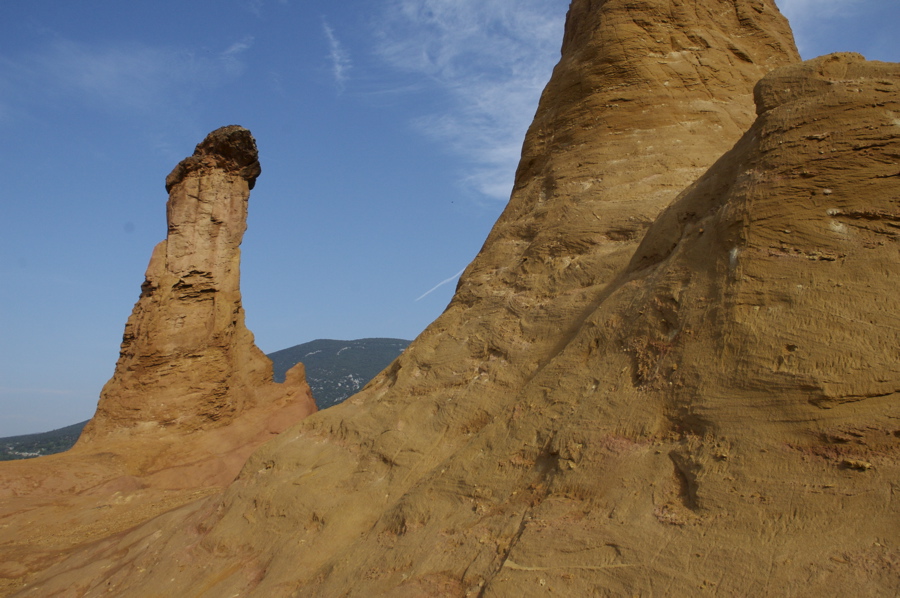
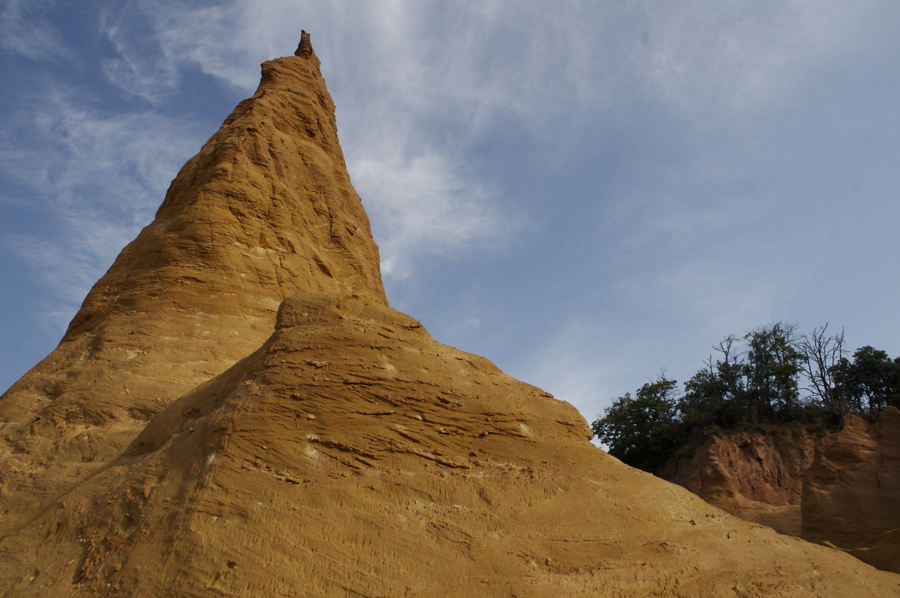


Rustral, a town in the Luberon region, is rich in orange soil. As I hiked through a “mini-canyon,” I enjoyed appreciating the color of orange by viewing my surroundings. There were orange rocks in the shape of cones rising above the ground. They appeared as if they were sculptures as each one of the rocks had its unique appearance. As I walked on the rocks, I was amazed by the diversification of colors in one little rock. It looked a puddle of paint in different hues of browns and oranges.
I took a few samples of soil in hopes of being able to create some paint.
September 30th, 2009 by Rachel | Country: France | No Comments »
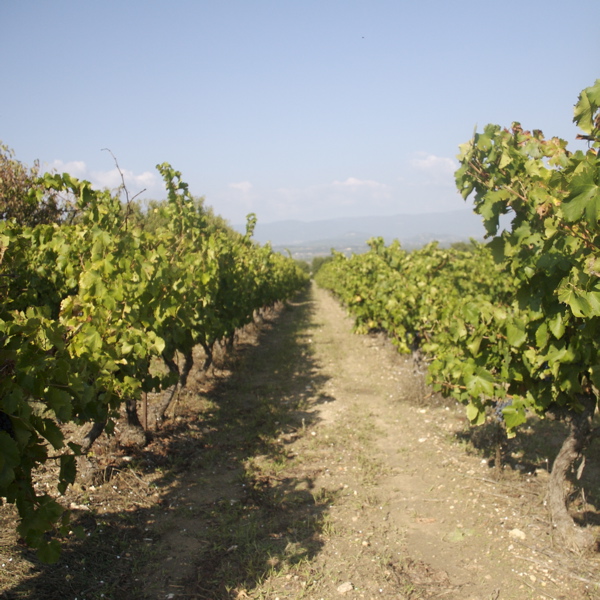
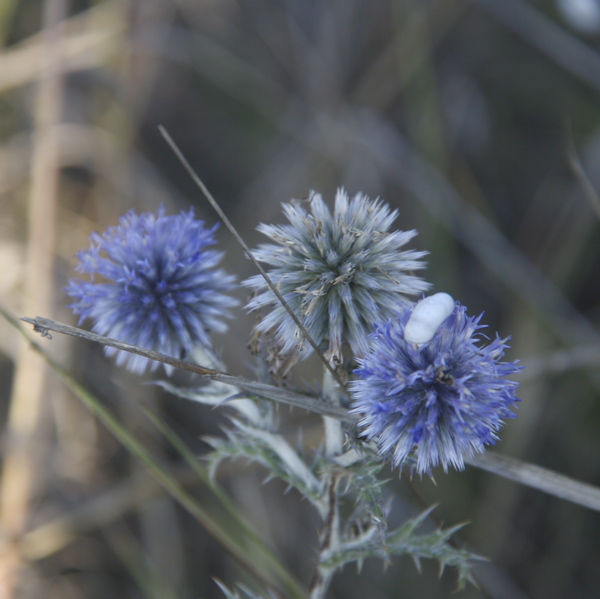
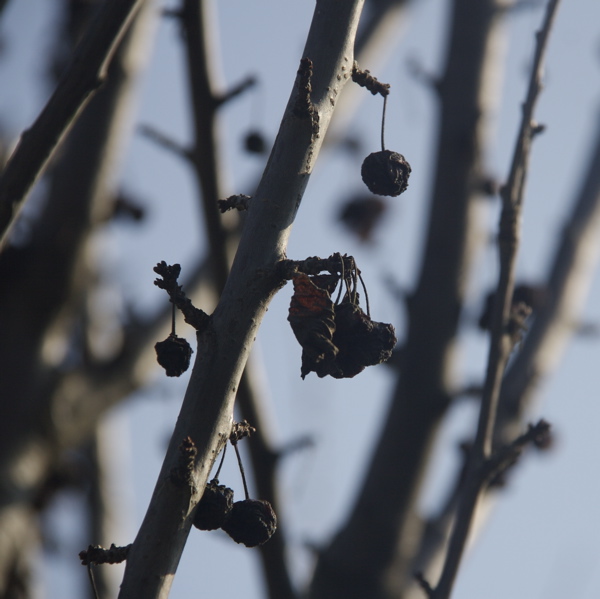
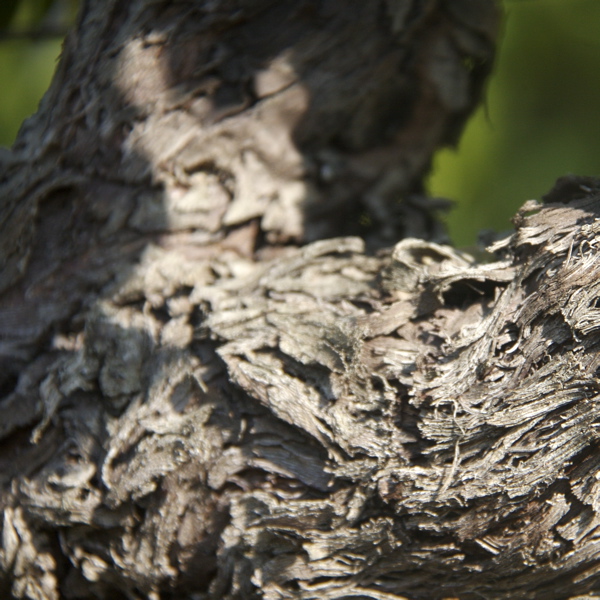
Provence is filled with incredible charms. One of the best charms is being in a surrounding where one can appreciate nature. One sunny day, I headed down the mountain to a field of vineyards and plants. I always find vineyards to be an art of a landscape. The vines are perfectly lined up in rows, and they’re very uniform in colors as they are green at the beginning of fall. As time goes by, the leaves turn to reds, oranges, yellows, and browns. Even though the leaves appear to disrupt the uniformity of colors, there is still a harmony because all colors are warm.
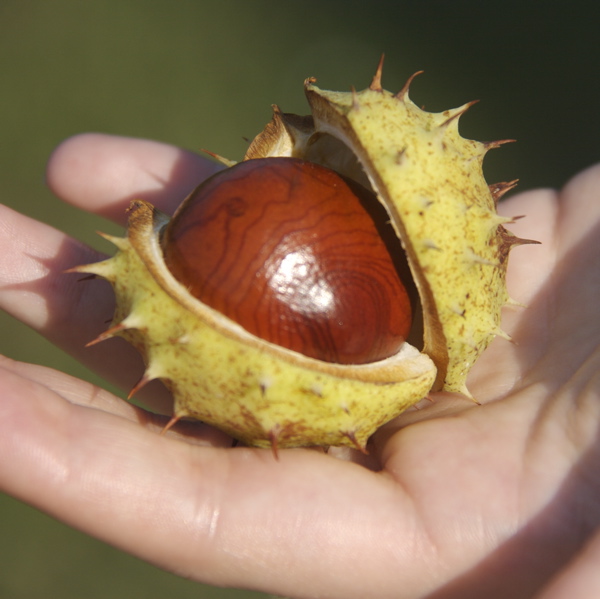
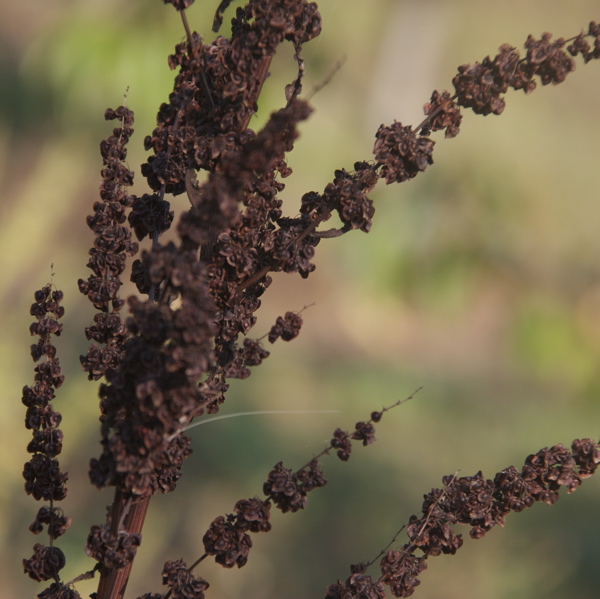
By the vineyards, there are plants in various shapes and colors. For instance, there is one in a lavender ball shape and another in a red, long and thin form. Each has its own unique textures such as one has prickles. Hiking through the field of Provence is an experience that cannot be missed.
September 30th, 2009 by Rachel | Country: France | 1 Comment »
As quite a few noticed that I’ve been tweeting about my intense work on preparing a proposal for an art show in Lacoste where I’m studying, I am finally releasing the proposal to the public. I gave a presentation to the class and, while I received positive responses, there is one glitch! I have to make sure that I can receive an “OK” from the administrators!
September 30th, 2009 by Rachel | Country: France | No Comments »
Riding through the narrow roads nestled in magnificent mountains of Luberon region always leads us to incredible treasures. For instance, today I came across a charming town called Lourmarin. This town is a “key link” between the alps and the Mediterranean which is known as the “combe.” This town has buildings built right next to each other like any other villages in Provence. This is one of the unique urban design in Europe as most places in the US have buildings totally spread out. I absolutely love admiring the windows in this town as there are beautiful flower pots resting by the windows and the shutters are absolutely colorful. Another beauty of this town is that there are quite a few unique boutiques rather than mega-corporation stores. Thus, this givs me the opportunity to see products that are unique to the village and also one of a kind.
Aside from visiting the village, my art history course trekked to the chateau of Lourmarin, a calste that was first built in 12th century. This castle was built in three states:
Fortress: built in 12th and 13th century by the Baux family.
Chateau Vieux – built in the 15th century by the Agoult family -> the Baron of Sault and forcalquier.
Renaissance wing – “Chateau Neuf” – built in 16th century by Blanche de Levis-Ventadour
Stepping inside the old chateau was like traveling inside an art history textbook as I was able to see the architecture structure during the Renaissance era. In this part of the chateau, there is an arcade with pointed arches surrounding the balcony. As I looked down from the balcony, I saw a beautiful courtyard and according to the tour guide, during the summer time, there are art exhibitions.
Then I proceeded to the kitchen. Being in the kitchen was like traveling to the past. A large wooden table rested in middle of the kitchen. Pots and pans in shiny bronze hung up on the wall. According to the tour guide, all of these beautiful copper kitchen appliances came from Apt, a city about 10 km from Lourmarin. The tour guide also mentioned that when Robert Laurent Vibert, an industrialist and historian, brought the chateau to preserve it, he decorated the kitchen with furniture and paintings from his collection which he got on his voyages since the kitchen was empty.
After viewing the kitchen, I went to a large room which I thought was the ballroom since there was a grand piano. Apparently, it’s a dinning room. However, there were concerts in this room according to the tour guide.
Then I headed up the stairs by taking a spiral staircase. Spiral staircases were a common architectural design during the Renaissance era.
I was proceeded to a magnificent bedroom that was designed in 18th century. There were elegant furniture including cupboard, shelves, table and chairs. It reminded me of visiting the Versailles in Paris.
After viewing the bedroom, I visited the reception room which had tiles dating back to 1920.
Unfortunately, my class didn’t have the time to visited the rooms on the 2nd floor which had a music room and a painting room.


