June 5th, 2007 by Rachel | Country: Italy | No Comments »
After a few hours of touring Rome, I came to a realization that Rome is a multilayered book. In other words, Rome is flourished with artifacts and architectural structures from every period we can name – Ancient Rome, Renaissance, and Baroque. Reading a city is like a book.
Pallumcest – architectural structures and designs of all kinds of historical periods in one area.
The word “pallumcest” is an important word in Italy and throughout Europe as they’re known for having architectural designs from several different kinds of periods such as ancient times, medieval, Renaissance, and many others in one city. Rome is a perfect example of a city that has “pallumcest.”
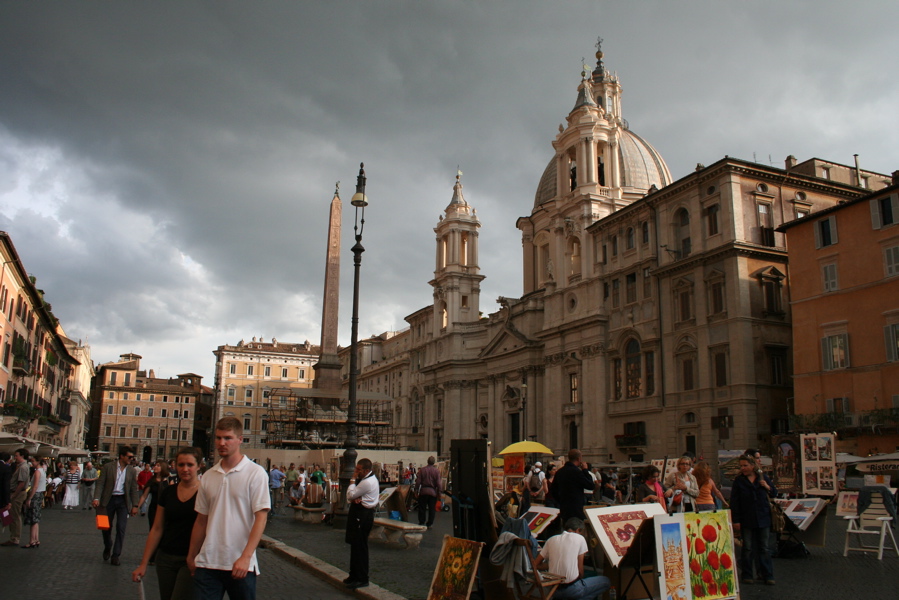
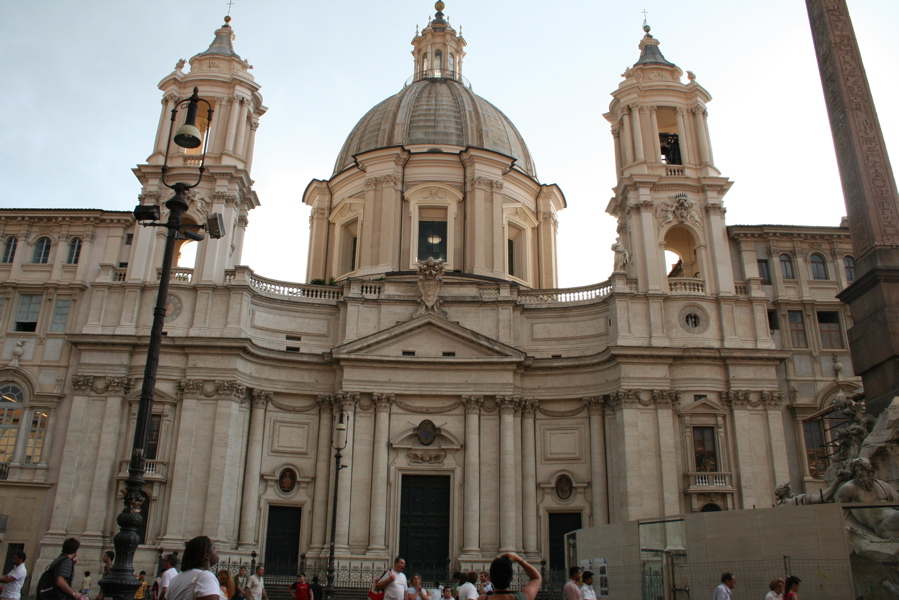
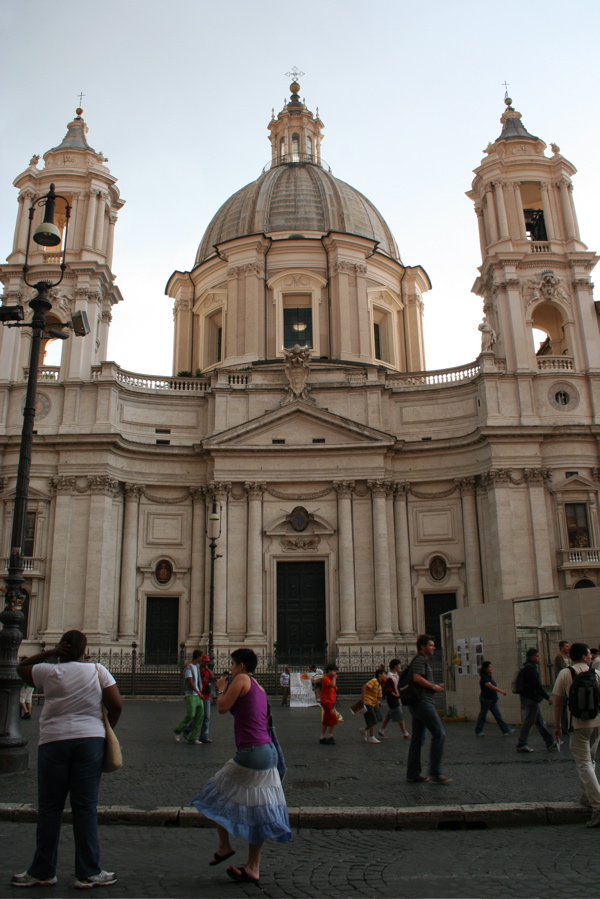
My art history professor took us to Piazza Navona, an area that is typically the center of Renaissance Rome, but it also has Baroque traces as San’t Agnese take place there. Baroque is a period of style that used exaggerated motion and clear, easily interpreted detail to produce drama, tension, exuberance, and grandeur in sculpture, painting, literature, dance, and music. San’t Agnese done by an architect named Borromini, has the typical Baroque traces because of its convex and concave structure. The façade of the building is curvy and the correct term to describe the curviness of the façade is concave and convex. It has a theatrically look which is certainly a Baroque trace (think of the paintings done by Caravaggio – they look very theatrical), and it’s a central plan church. San’t Agnese also has two towers and dome which is placed between the two towers. Critics say that having two towers on each side of the dome makes the design look better as it emphasizes the center better.