June 6th, 2007 by Rachel | Country: Italy | No Comments »
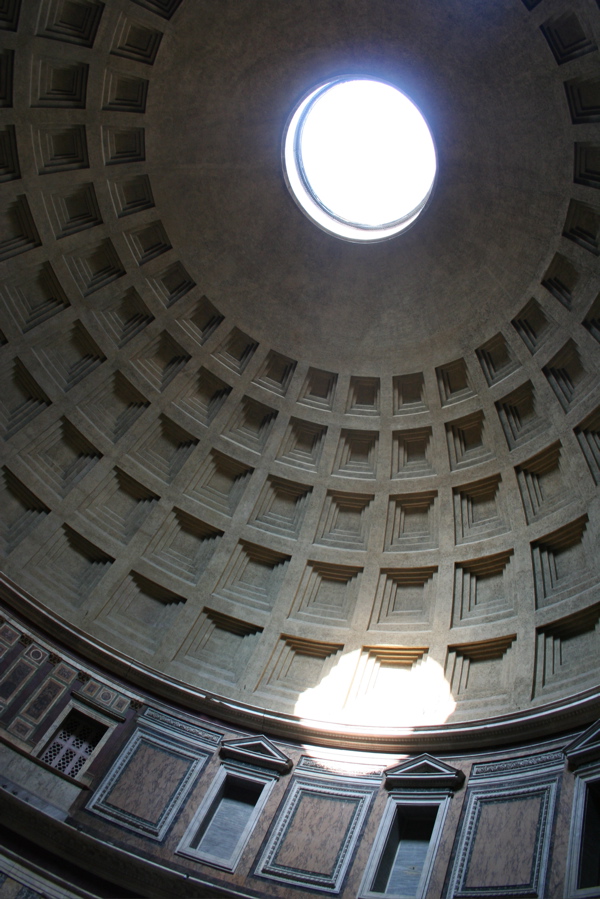
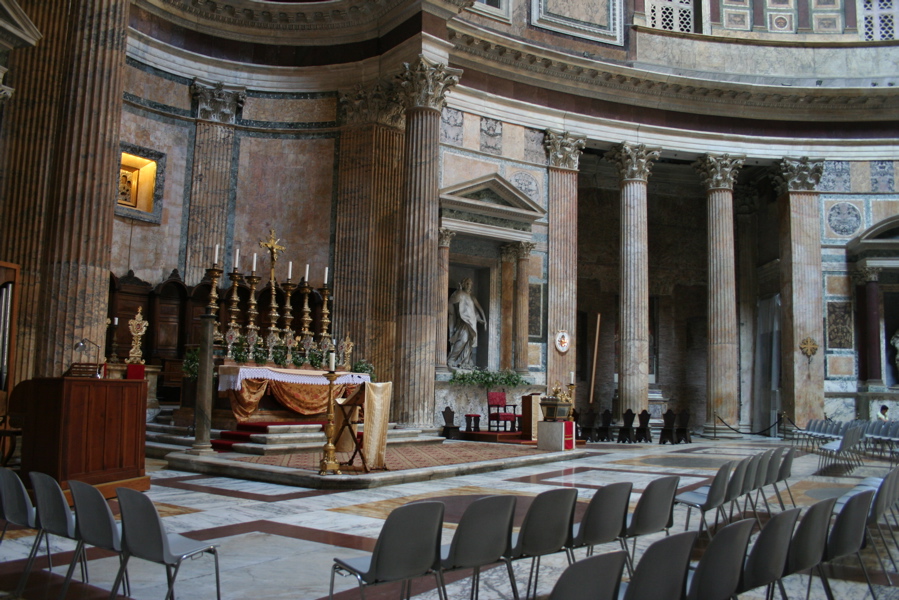
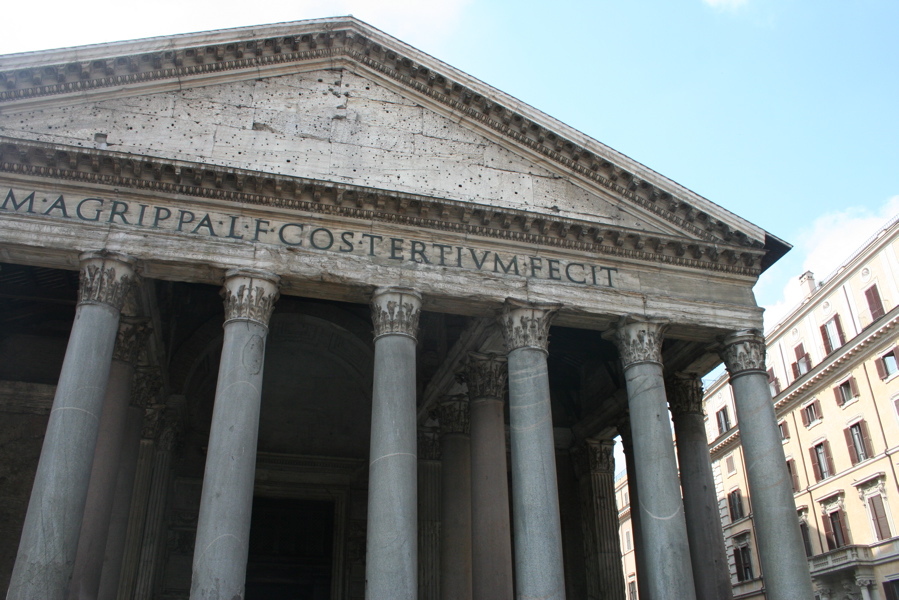
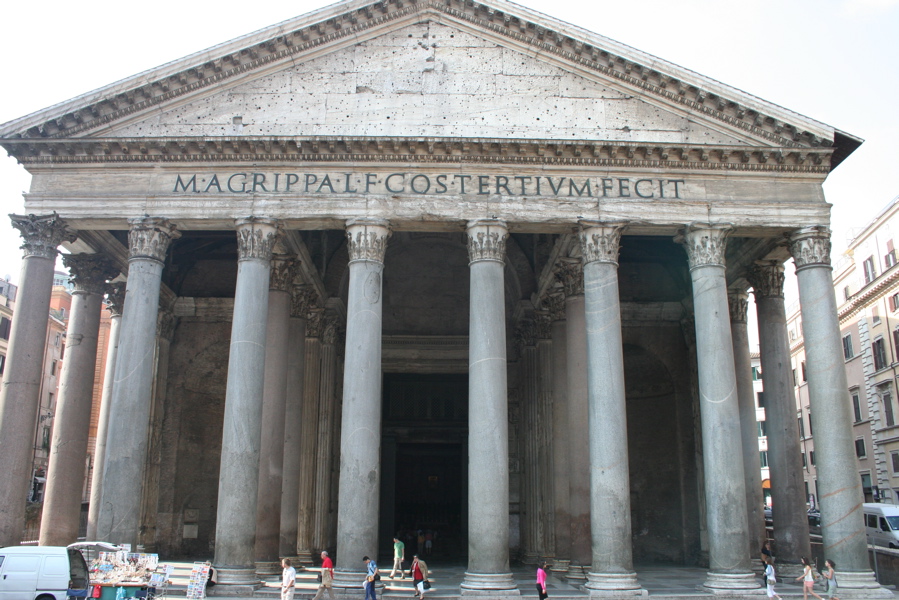
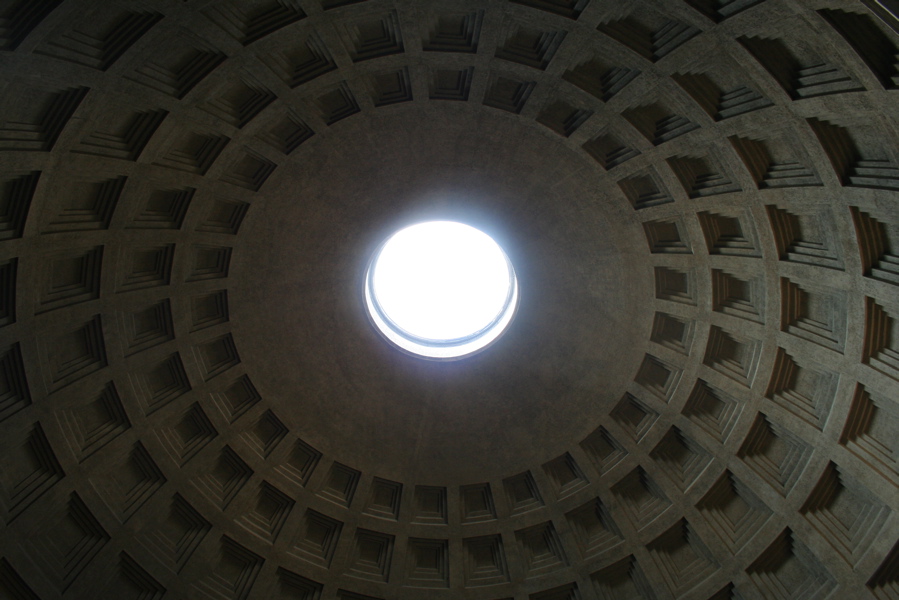
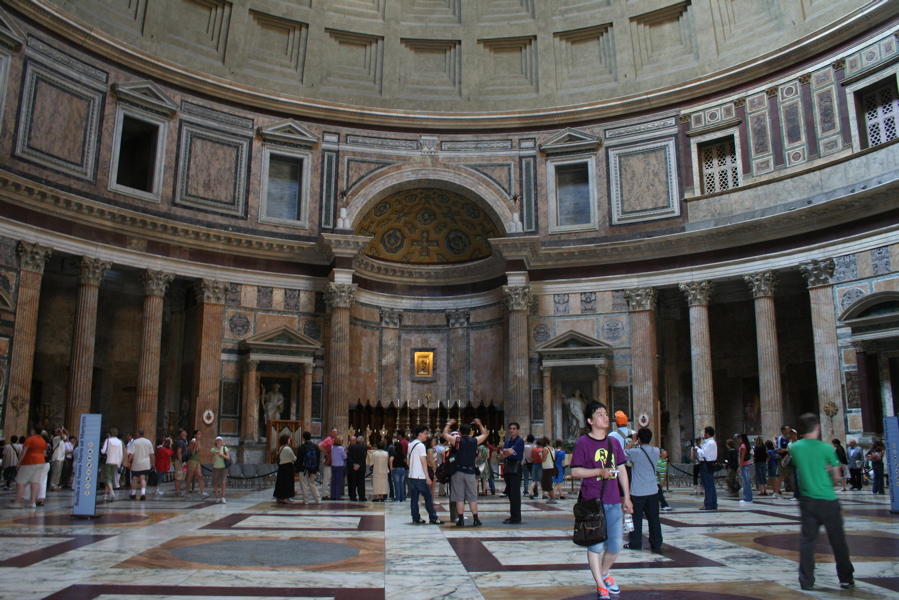
As we walk up the steps of the United States Capitol building or take a photograph of the White House in Washington D.C., we certainly wonder where the inspiration of the designs of the white marble or concrete material, ionic, doric, and cornithian columns that stand in rows beautifully on the front of the white house and on the dome of the US capitol building, and the pilasters (columns that are built into the walls and provide no support to the building) that rest on the walls of the capitol building come from. We don’t see these designs just in Washington D.C. We see them everywhere. Even in people’s homes. We call them classic because they NEVER go out of style. Who started this design and made them classic for years to come? Today, I visited the Pantheon. The front of the Pantheon building reminded me a few very familiar American buildings. The Pantheon has a combination of pronaos, another word for porch, of a temple with a rotunda, a circular structure. In the porch, there are eight Doric columns in the front and three on the sides. When view the front of the building, it reminded me of Monticello, Thomas Jefferson’s, the third President of the United States, home, and he also designed it. Monticello has a hemispherical dome along with a pediment and – columns in the front. However, the structure is not circular like the Pantheon. The porch with the triangular pediment and the columns also reminded me the front of the White House. As I walked inside the building, I noticed something very spectacular that actually makes the Pantheon unique. There is a huge oculus on the top of the dome that measures 30 feet in circumference. The oculus is a huge circular opening that is in the center of the dome that allows sunlight to come in and give the whole building light as there were no electricity back then obviously. This oculus is actually the ONLY light source and that is pretty incredible as the sunlight is strong enough to light up the whole building. By the way, there are NO glass, NOTHING clear covering the oculus to prevent rain from coming inside. The rain just comes through the opening and moistens the whole interior. The interior has to be well made for it to last for many years. The dome has a design that looks like a waffle. In other words, the dome has a grid design. This building was built around 27 BCE to 25 BCE by Marcus Agrippa who wanted to dedicate this building to Augustus, his father – in – law, but Augustus rejected the honor. Instead, the building was dedicated to the major gods. In fact, the inscription below the pediment (the triangular structure), M – AGRIPPA – L – F- COS – TERTIVM – FECIT means “Marcus Agrippa built this.” Eventually, the Pantheon was partially destroyed and then, Hadrian restored it. The word “Pantheon” means to all Gods. The Pantheon was first a temple, but the idea of the building changed over the years. At some point, it was changed to a church by a person who legalized Christanity, Constantine. The Pantheon was a prime object for the Renaissance era. In other words, architects were inspired by the Pantheon to create classical structures. To make sure that everyone understands, the Pantheon is NOT Parthenon. The Parthenon is a Greek temple in Athens, Greece.
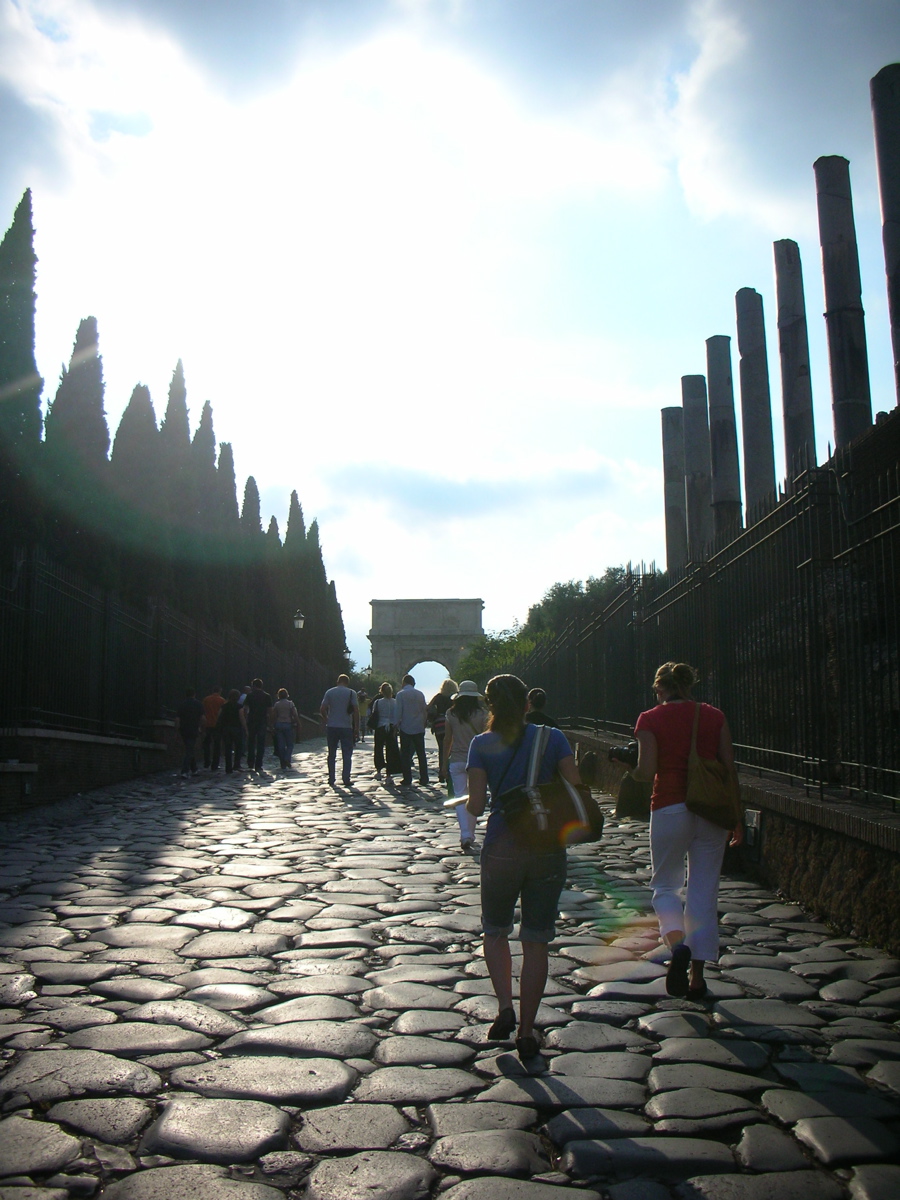
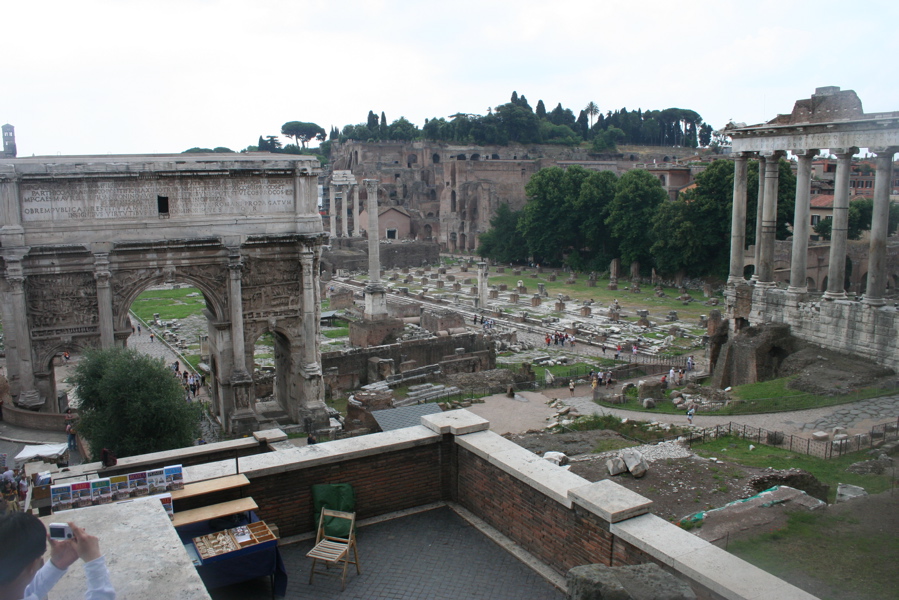
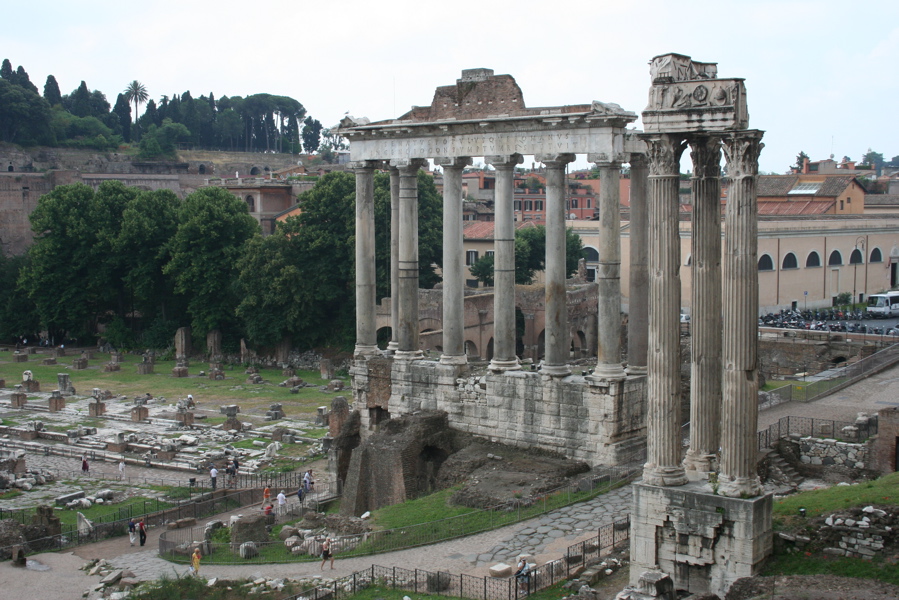
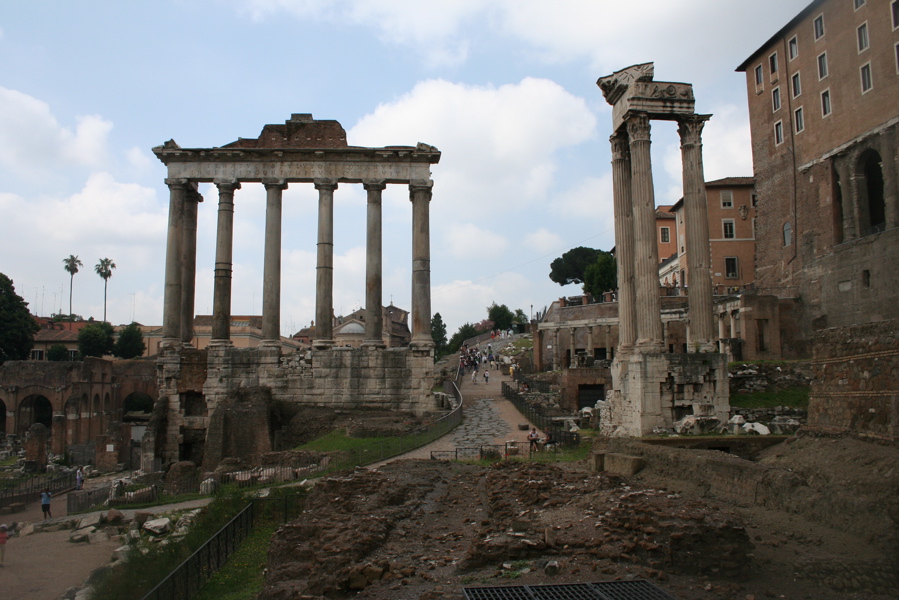
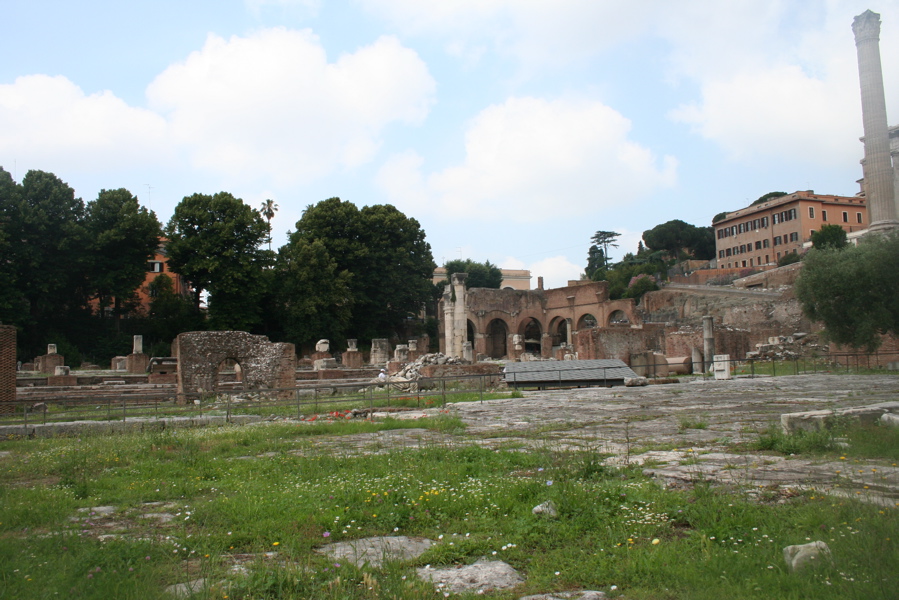
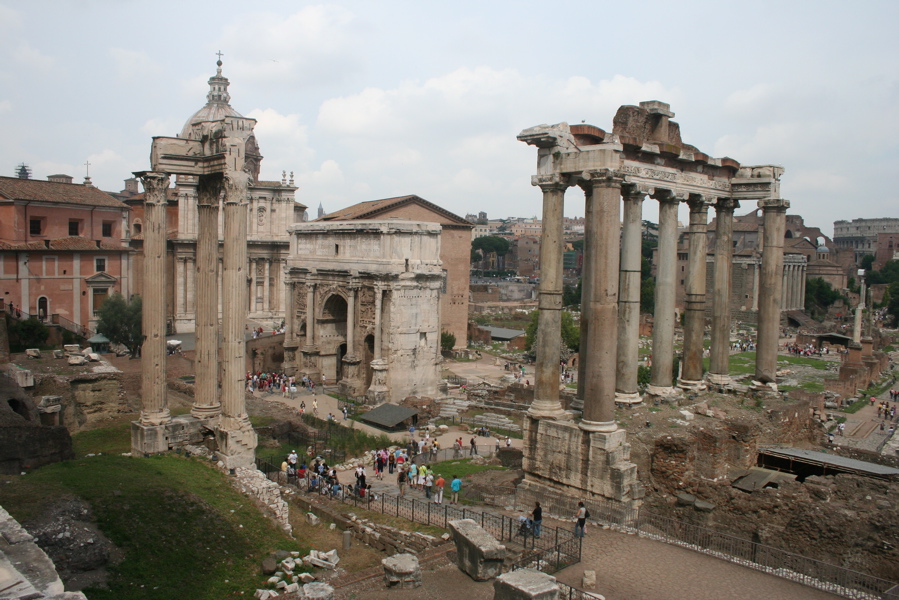
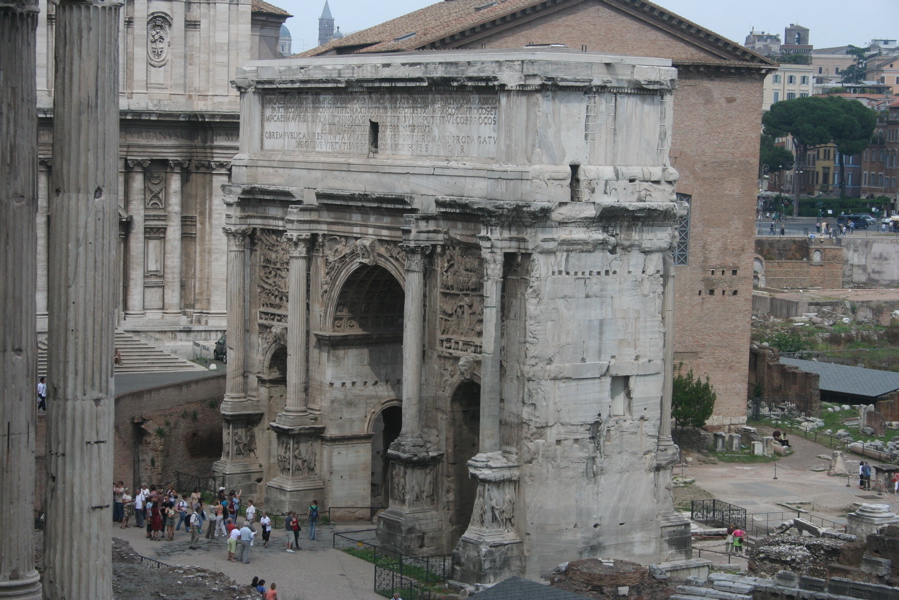
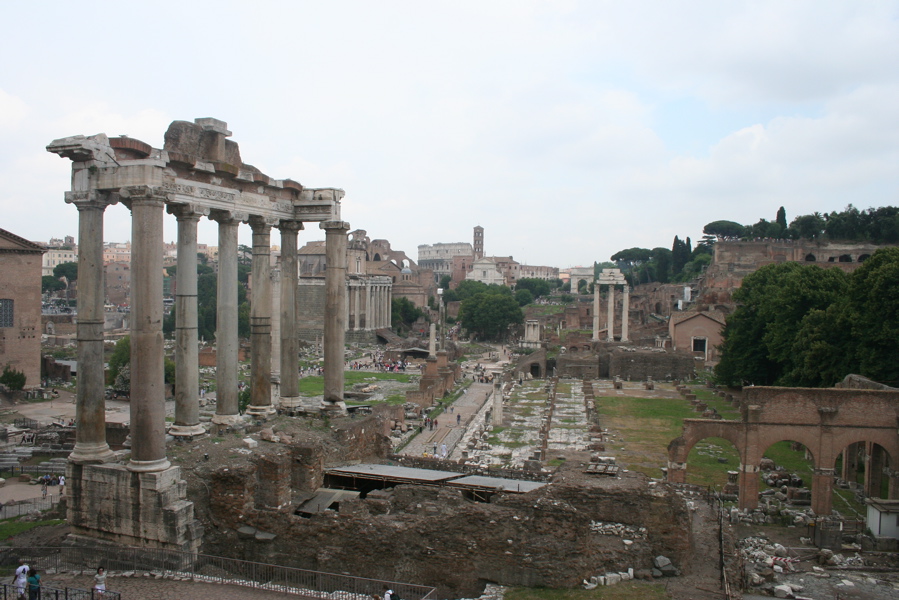
I hiked through an area of the ruins of the Ancient Romans also known as the sacred grove. While many of the buildings were nearly crumbled down, the leftovers of the buildings had just enough designs for today’s and future’s generation to see. We walked through the bumpy cobbled stone paths and viewed large acres of fallen stones lying on the grass, structures with few columns resting on the ground. This area that we walked through is called the Trajan Forum. One of the well-known structures in this forum is called the Temple of Apollo Sosianus. This structure was a temple and was destroyed at some point. There are only three columns remaining.
According to the first century writers, Ancient Rome was founded on April 21st, 753 BCE by the twins, Romulus and Remus. These twins were descendents of Aeneas who was the son of Aphrodite and the mortal Archises. Aeneas married Lavina, the daughter of Rome’s king. Romulus and Remes were born from the union of the Vestal Virgin Rhea Silvia with the god Mars. These twins were thrown into the Tiber River by their great-uncle, a usurper when they were born. The river took them to the foot of the Palatine Hill where they were found by a she-wolf. They were raised and suckled by the she-wolf. Then, they grew up to be the founders of Rome. Okay – I know this seems non-senseless as how can the babies be thrown into the river, be raised by a she-wolf, and the name of Aphrodite is a god. Of course, it’s mostly a mythology! However, this story could be partially true as maybe Romulus and Remes really existed, but storytellers just changed the story as time passed by like the legends of King Arthur where the King Arthur could have been a real person according to some scholars.
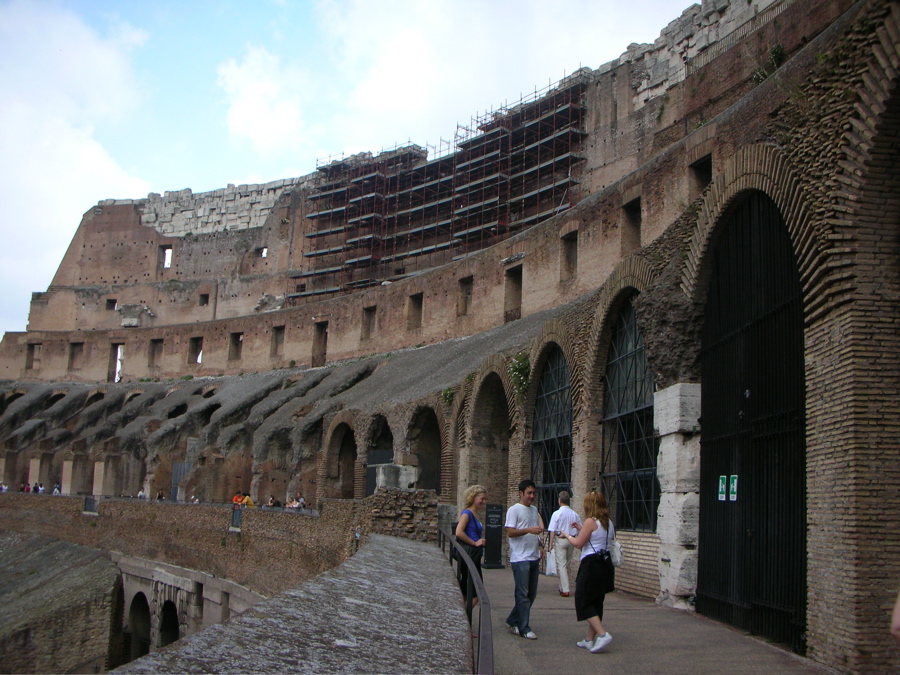
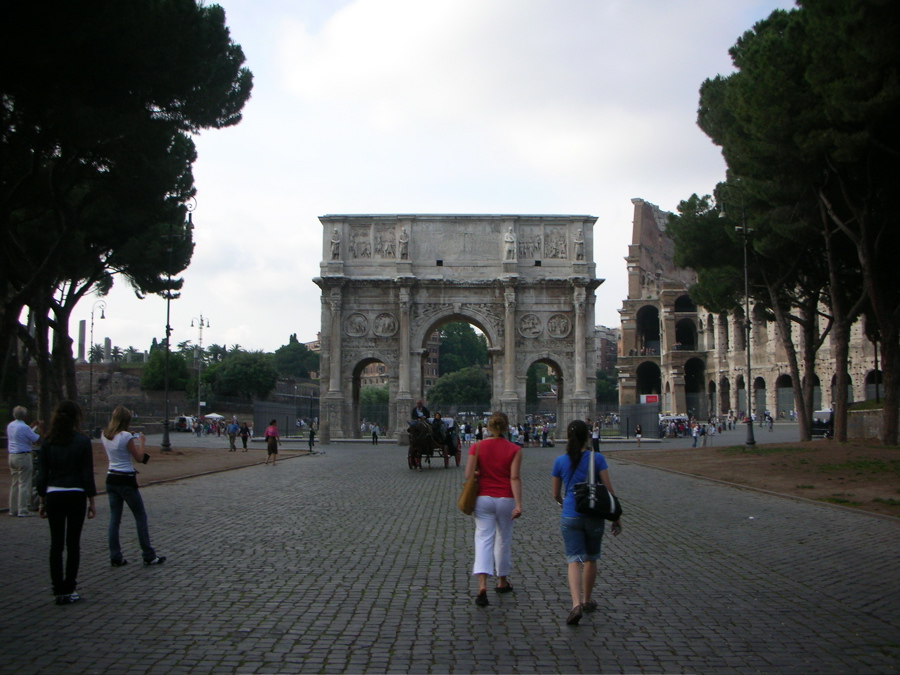
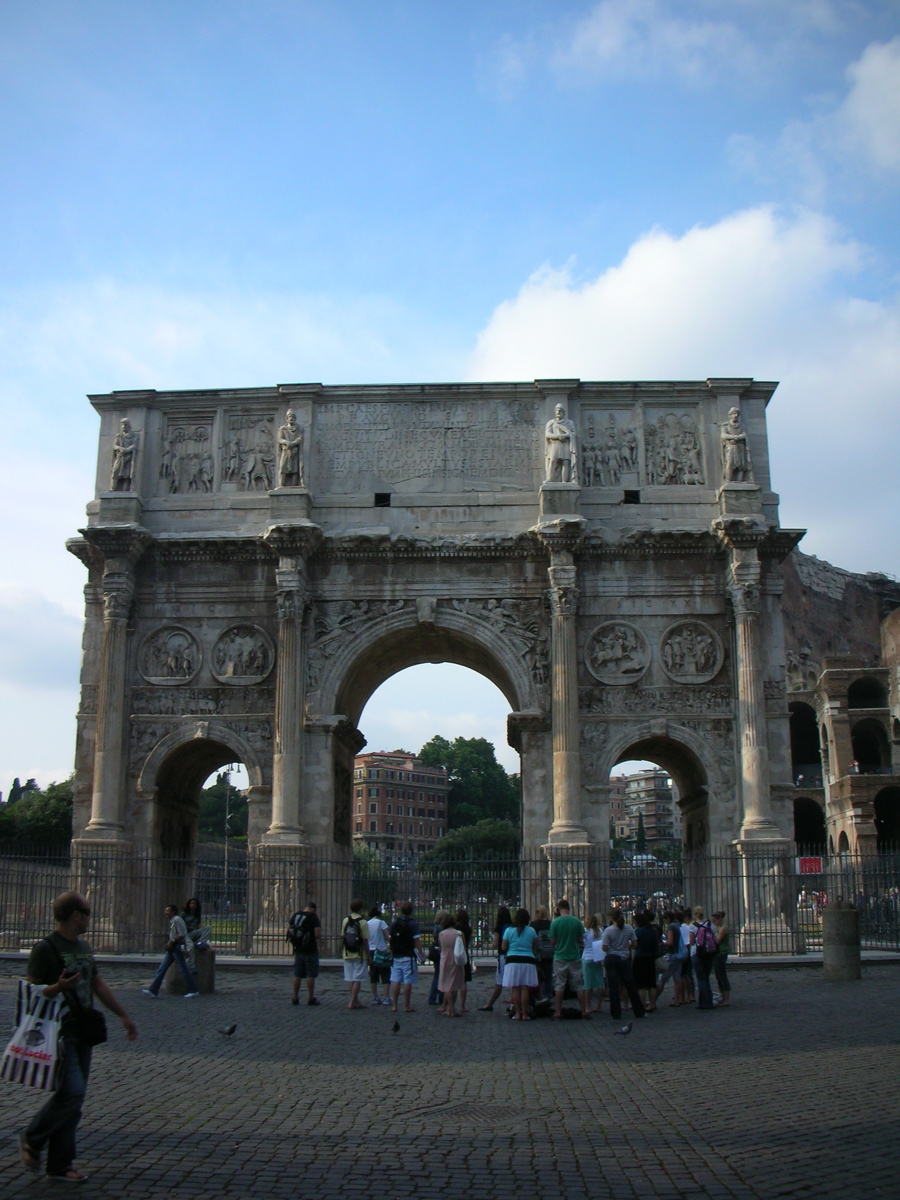
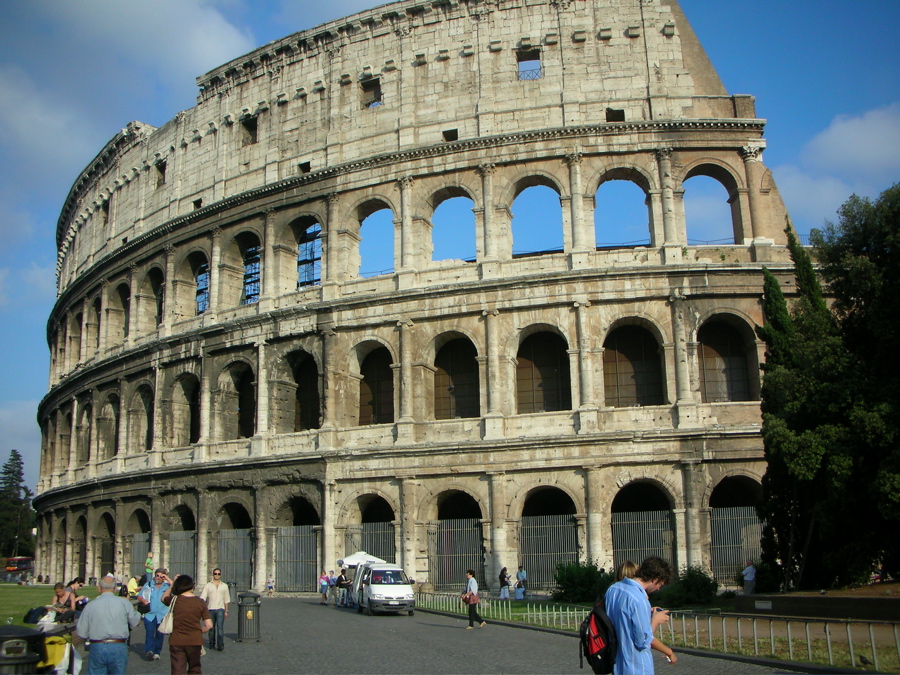
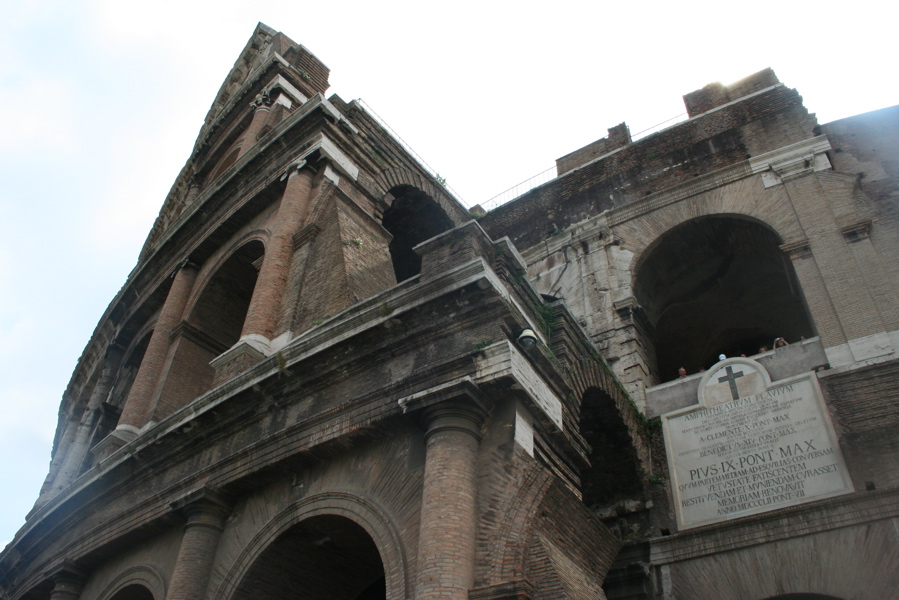
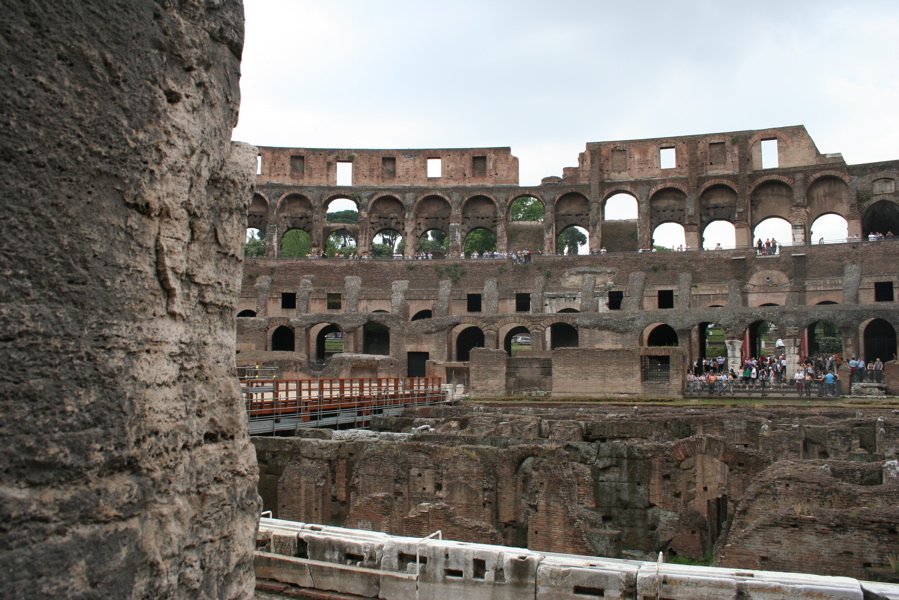
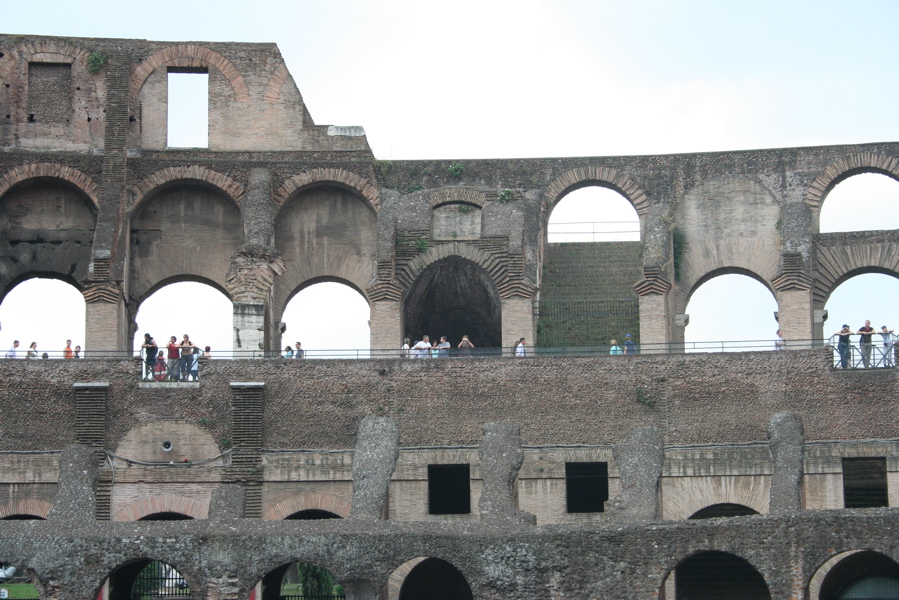
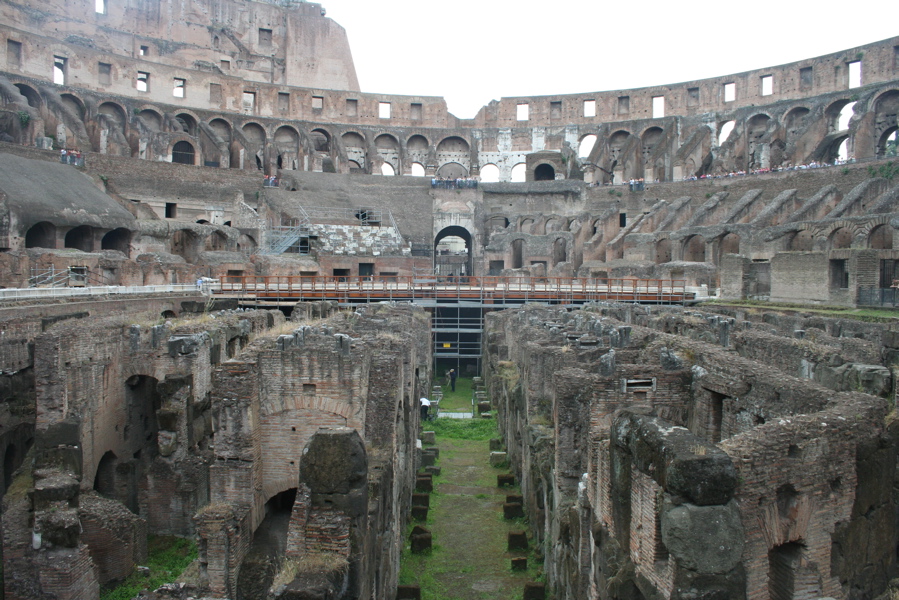
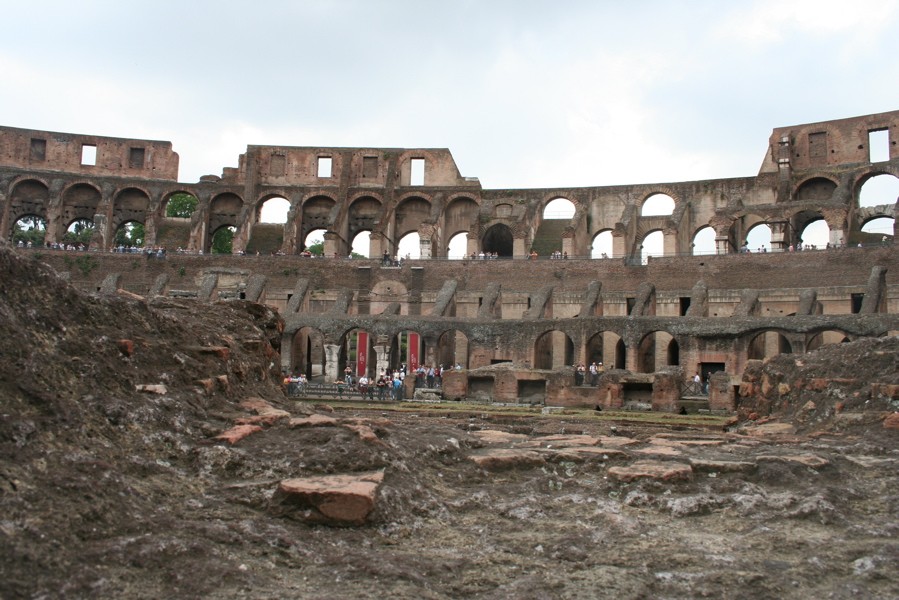
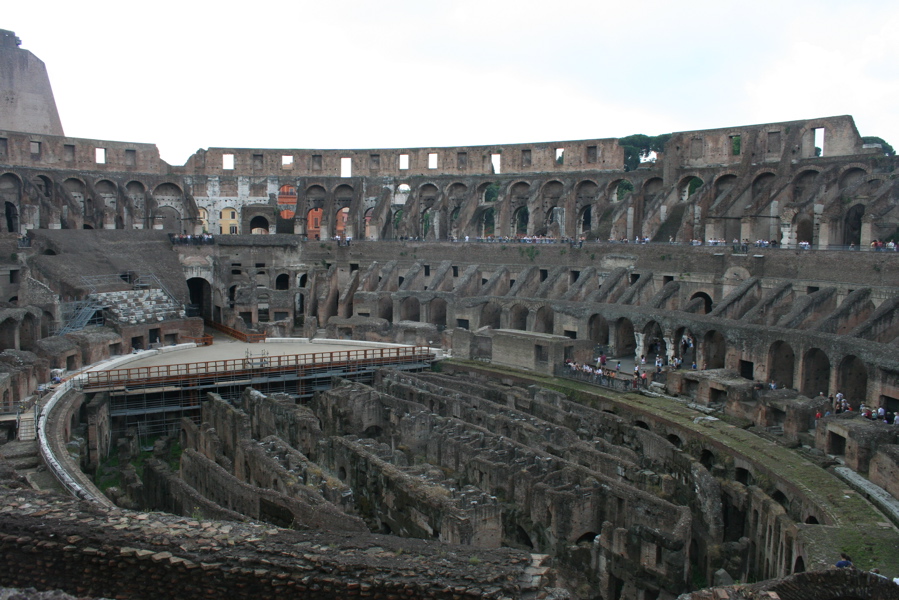
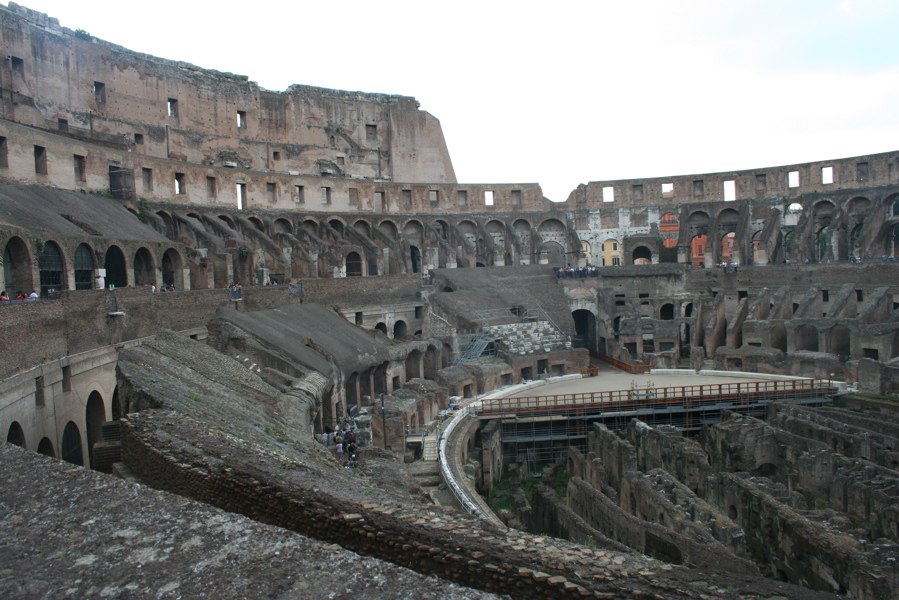
The Trajan Forum directed us to the very first arena/amphitheater in the world, the Coliseum. The Coliseum was built in 80 B.C. to provide 80,000 seats for theater shows. The name “Coliseum” comes from the statue of Nero in gold. Nero was hated by the Romans and thought to have started the fire of Rome. What’s also so unique about the Coliseum is that it rows of engaged columns and each row has its own set of columns. The first row has Doric columns, the most simple column form. The second row has ionic columns which is a little more complex than Doric columns. The third row has the most complex columns, Corinthian columns. The last row just has pilasters, engaged columns that don’t stand out as much as engaged columns. All in all, the first three rows from the bottom depicts a graduated design. In other words, the bottom is the simplest and the third is the most complex, and so it goes from simplest to the most complex.
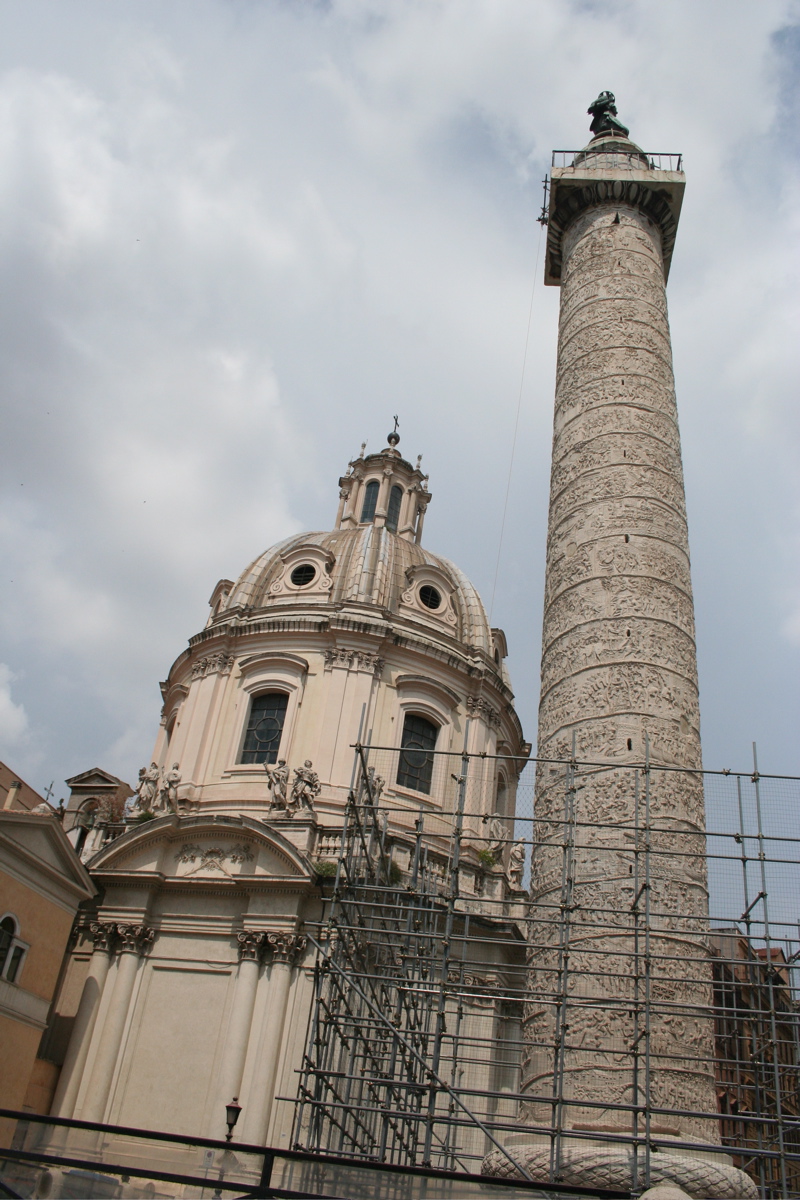
During the ancient times was surely different from the today’s world. We are flourished with Internet, telephones, newspapers, televisions and all sorts of technology that help us research historical facts and keep us updated with current events from all around the world. Well, during the ancient times, keeping records and passing on news was quite complicated, as printing didn’t exist and not even paper. Therefore, written records were kept on stones or dried clay. The Trajan’s column is a 130 feet tall column that consists of low – relief sculptures. This column does not just depict images. It’s technically a form of a papyrus scroll that depicts a historical record of Trajan’s. an Emperor of Rome, defeat against the Dacians.
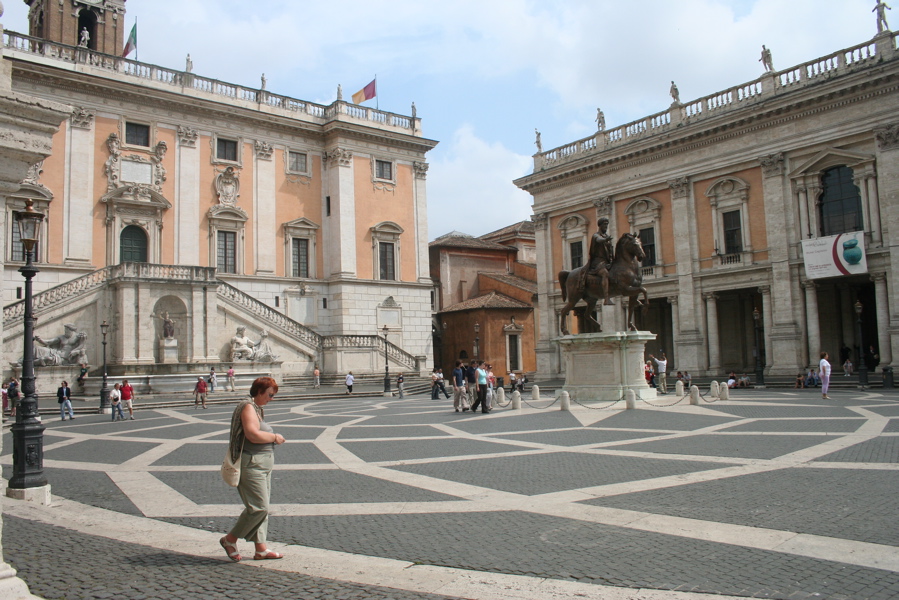
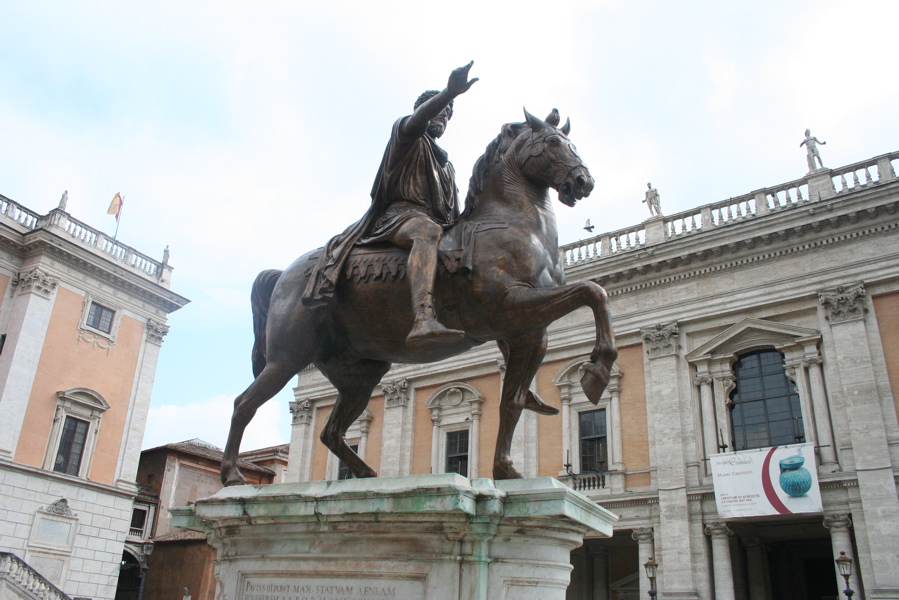
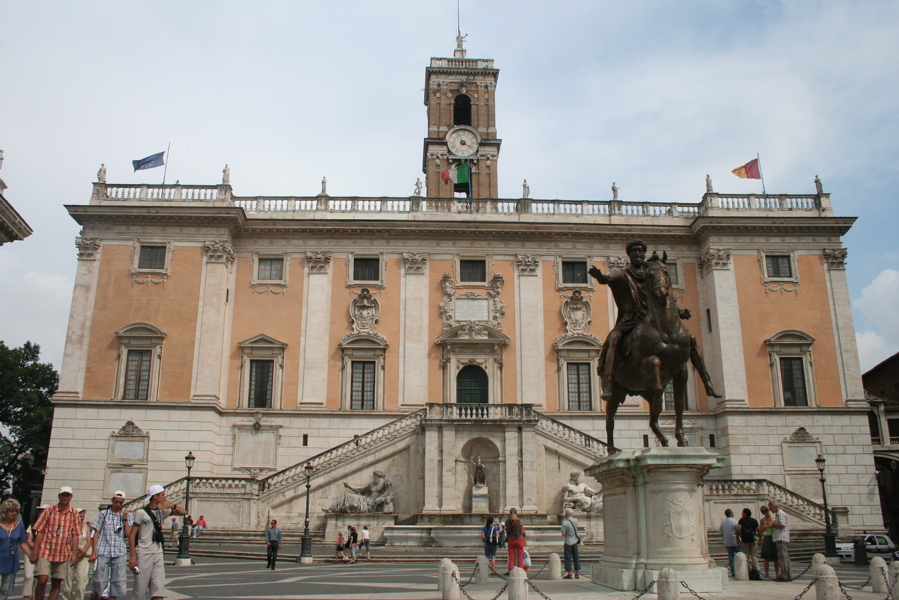
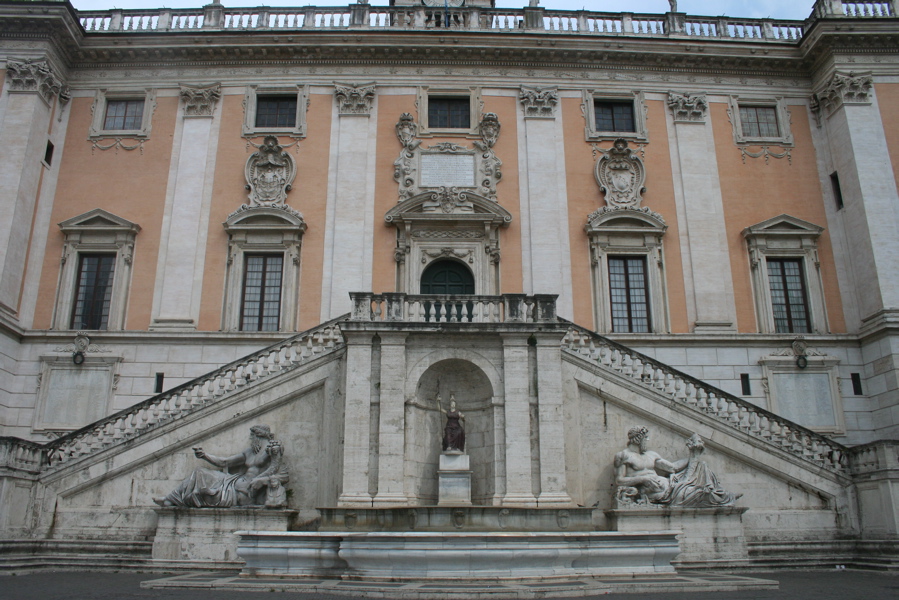
Michelangelo was not just a sculptor and a painter. He was also an architect. He remodeled a well- known Roman architecture, the Campidoglio. Pope Paul III Farnese commissioned Michelangelo to renovate the facades of the palaces and build a new staircase, the Cordonata. It was completed in 17th century.


While I got some sense of the ancient Roman architecture from the visits to the Trajan Forum and to the Coliseum, I continued immerse myself in the ancient Roman ruins by going to the Baths of Caracalla, also called Thermae Antoninianae. According to the guidebooks, this place is one of the most magnificent and best preserved of all the Imperial baths, but as a tourist, it was hard to imagine it as this place looks nearly destructed like any other ancient Roman ruins site. There were bunch of walls made of brown stones that looks like they’re continuing to crumble down. In some areas, there were some parts of a floor that consisted beautiful patterned tiles, but most of the floors had just regular rocks and grass. This place was basically a recreation center that consisted two gymnasiums, a hot bath, and a swimming pool.
I really wonder how these ancient Roman ruins were ruined. I’m sure many of them were caused by natural disasters and wars, but nowadays, if something is ruined, we rebuild the place right away. I’m assuming that the ancient Romans didn’t bother to rebuild their places and just moved on by building newly updated architectures elsewhere. This kind of reminds me of the World Trade Center. When the World Trade Center was ruined, we, the Americans, moved on with our life by creating a whole new tower that will be even grander.


